Portfolio PDF
AI Hardware Security Compliance Portfolio
An industry-ready portfolio that reframes hands-on PhD research into the language of threat analysis, controls, evidence, validation, and residual-risk reasoning.
AI security researcher working across hardware trust, accelerator security, edge intelligence, and trustworthy physical AI deployment.
Brojogopal Sapui recently completed his Ph.D. in Hardware Security at the Karlsruhe Institute of Technology (KIT), graduating magna cum laude. His research centers on securing emerging AI hardware accelerators, with a strong emphasis on side-channel analysis, fault injection, secure execution, and hardware-aware trust mechanisms for modern intelligent systems.
He currently works as a Research Scientist at NaMLab gGmbH in Dresden, where he leads and contributes to rFET-based security-enabling hardware building blocks, secure test-chip design, and cross-layer protection strategies for future AI and hardware-root-of-trust systems.
Research Scientist, NaMLab gGmbH, Dresden
Karlsruhe Institute of Technology (KIT)
AI accelerator security, hardware trust, and implementation-aware defense
EDA flows, FPGA platforms, side-channel measurement, and security validation
These are the main technical directions that shape the perspective of this portal and the type of problems I enjoy working on most.
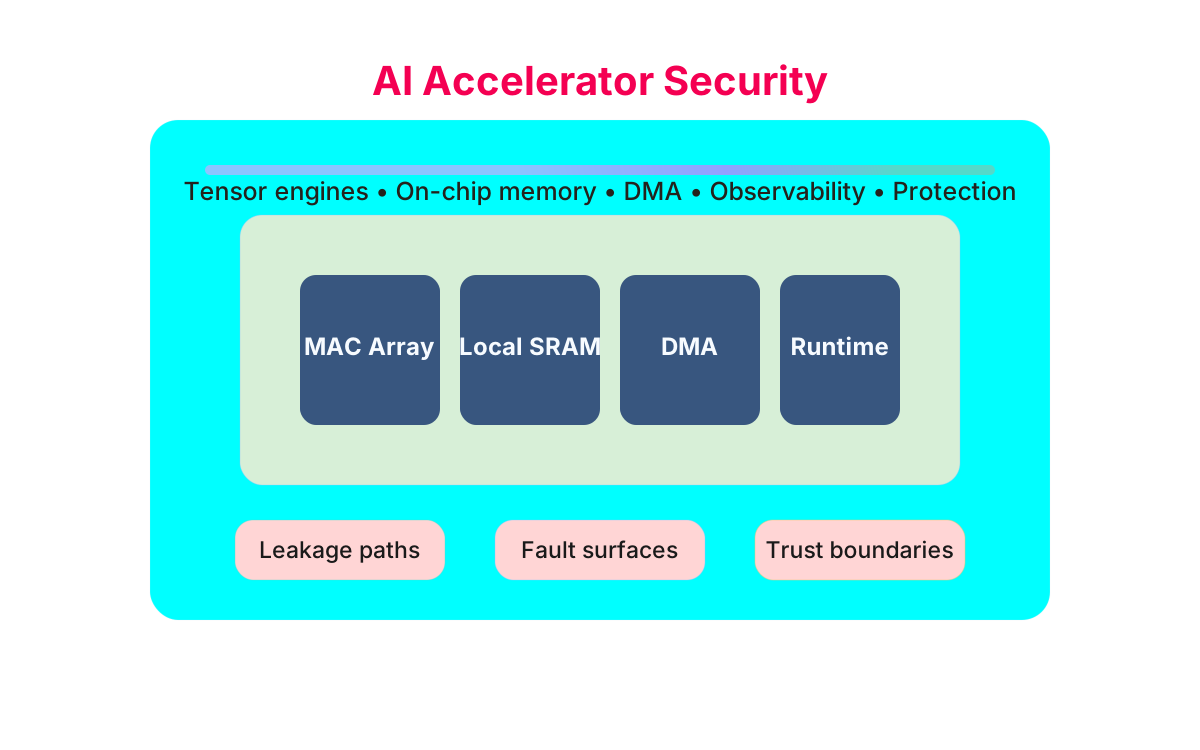
Security evaluation of CNN, SNN, HDC, and other emerging AI accelerators under realistic implementation, deployment, and physical-access assumptions.
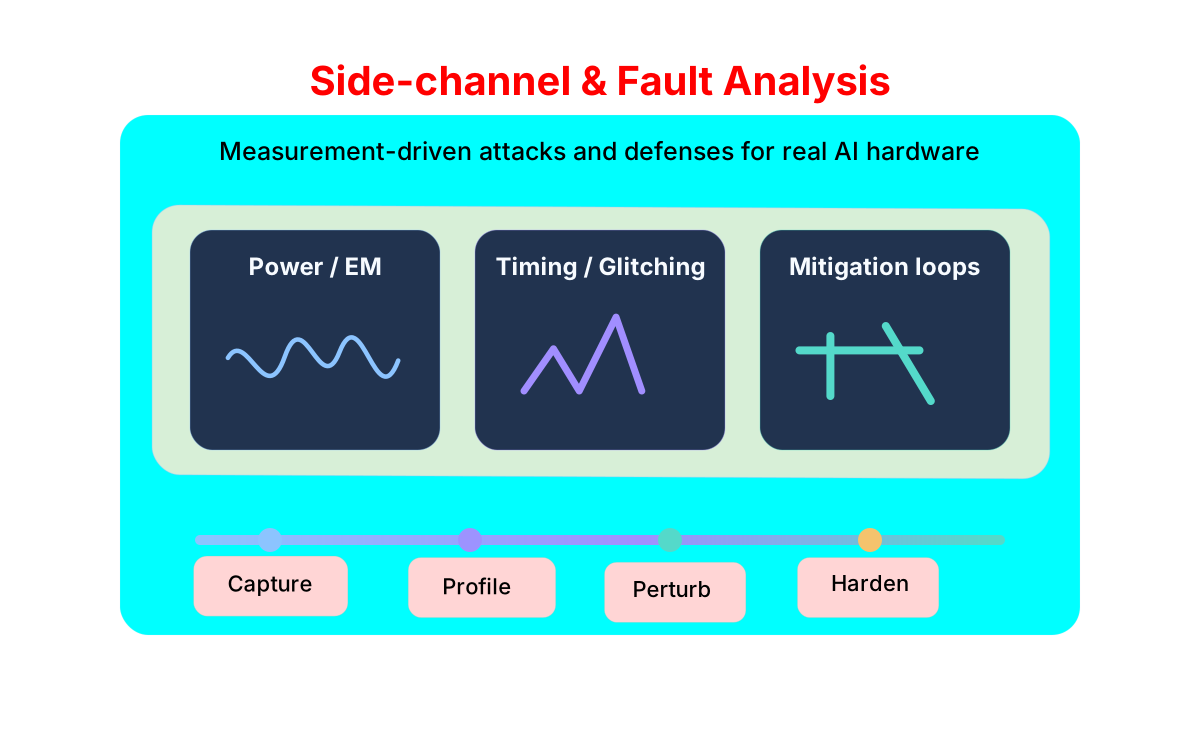
Leakage modeling, measurement-driven evaluation, automated ChipWhisperer and oscilloscope-based validation, and countermeasure development for hardware AI targets.
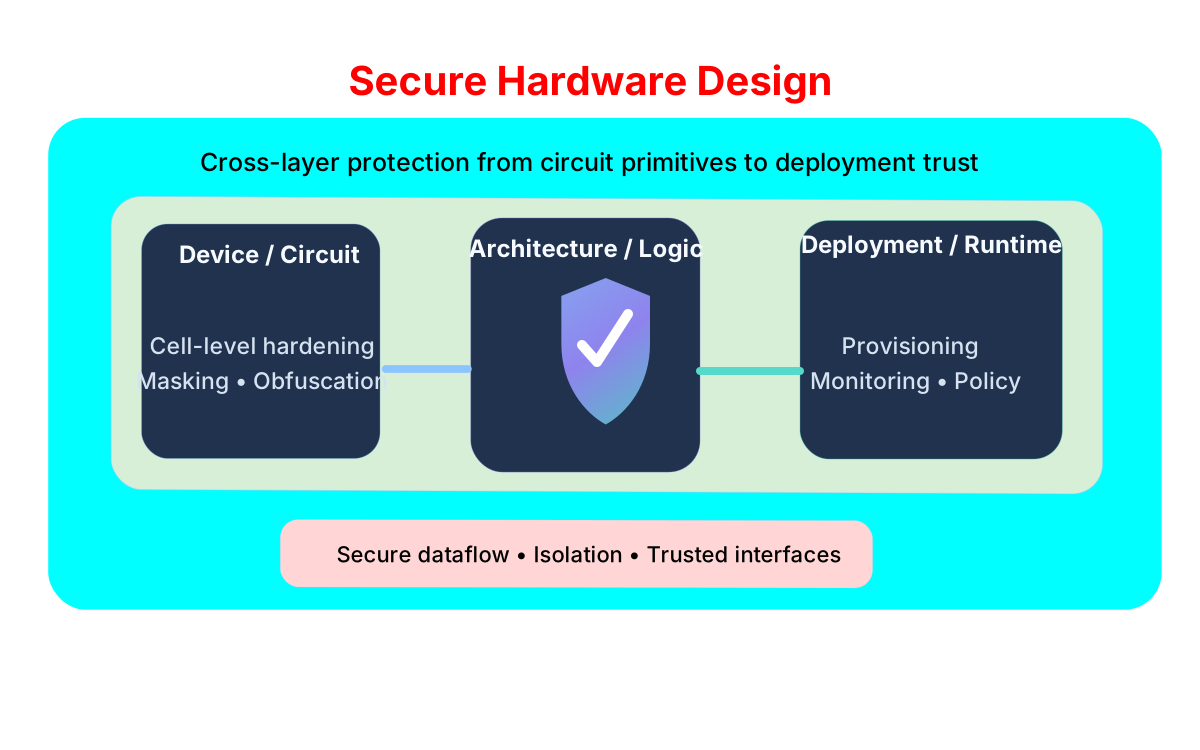
Cross-layer design of trusted execution paths, secure accelerator architectures, information-flow awareness, and hardware primitives for trustworthy AI deployment.
A compact view of the environments and themes that shaped this portal’s cross-layer perspective on AI security.
Built secure execution and validation flows for AI and cryptographic accelerators, with extensive work on fault analysis, side-channel attacks, and implementation-aware defenses.
Working on rFET-based security primitives, secure layout and tape-out flows, and device-to-circuit strategies that strengthen hardware trust for future intelligent systems.
Experience spanning automotive embedded security at Wipro, quantum randomness and cryptography at ISI Kolkata, and PUF security research at IIT Kharagpur.
To make the profile more useful for collaborators, hiring teams, and technically interested visitors, this page now includes two longer-form documents. The portfolio translates research work into an industry-facing security and compliance narrative, while the thesis provides the full academic and technical foundation.
An industry-ready portfolio that reframes hands-on PhD research into the language of threat analysis, controls, evidence, validation, and residual-risk reasoning.
The doctoral thesis presents a cross-layer study of physical security in emerging AI hardware, covering analog compute-in-memory, MRAM persistent faults, flexible neuromorphic security, and FPGA-based HDC vulnerabilities and countermeasures.
The portfolio is useful when the goal is quick professional translation: what was protected, how it was evaluated, what evidence exists, and how that work maps to industry security roles.
The thesis is useful when the goal is technical depth: device models, attack methodology, evaluation detail, and cross-layer design reasoning across emerging AI hardware platforms.
Move from the profile view into the structured research map, the highlighted trending topics, or the resource hub for deeper reading.