LLM Inference Systems
LLM inference is a systems problem as much as a model problem. Prefill, decode, KV-cache growth, batching, scheduling, and prompt isolation all shape the performance and security properties of real deployments.
What this topic covers
Transformer inference has at least two qualitatively different phases. Prefill processes the initial prompt context with high parallelism, while decode generates tokens incrementally and often becomes latency-sensitive and memory-bound. KV-cache state must remain accessible across steps, turning memory management into a first-class systems concern.
That systems view matters for security because prompt length, batching policy, generation dynamics, cache residency, and routing decisions can all influence timing, utilization, memory pressure, and co-tenant interaction. A secure LLM deployment therefore requires thinking about serving behavior, not just prompt injection or model weights.
Security significance
- Prefill and decode stress hardware differently and produce different external signatures.
- KV-cache growth makes memory residency and eviction policy security-relevant.
- Batching and scheduler policy affect both throughput and tenant isolation.
- Serving systems define how prompts, documents, tools, and user state meet the model.
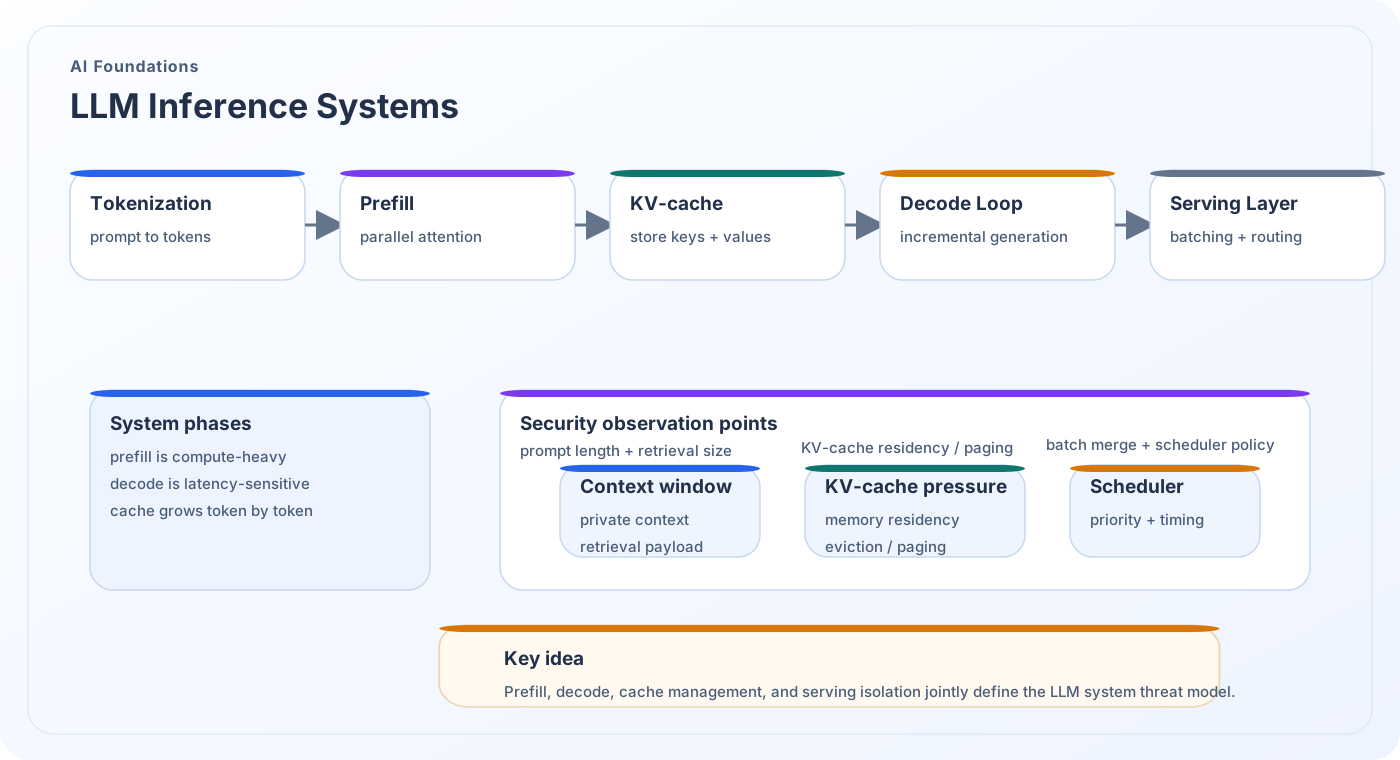
Operational phases that matter
Security-relevant behavior in LLM systems usually appears at phase boundaries or during resource contention.
Tokenization and prefill
Prompt parsing, retrieval assembly, and prefill transform user-visible context into the hidden state consumed by the model. This phase tends to be parallel but can still reveal context size and composition through workload shape.
KV-cache management
Keys and values accumulate across generated tokens. Their placement, eviction, compression, or offload policy can affect throughput, reveal sequence dynamics, and create persistence or privacy concerns.
Decode and serving policy
The decode loop is sensitive to scheduler decisions, batching, token throttling, and routing. Shared infrastructure can therefore leak information even when the model weights never change.
System-facing security questions
An LLM service should be analyzed as a pipeline with multiple observation and policy points.
How isolated are user contexts?
Prompt assembly, retrieval augmentation, shared caches, and background tools can all mix trusted and untrusted information. Strong isolation must exist before and after the model call.
What does serving reveal?
Latency variation, queueing, batch-merging behavior, or cache pressure can expose request type, prompt length, or operational priority classes.
Which failures propagate?
A serving bug, cache leak, or scheduler policy issue may defeat downstream guardrails even when the transformer block itself behaves as designed.
Back to the research map
Return to the structured research overview or continue browsing the other AI foundations and AI security themes.